
Kidney Cancer Journal · Peer-Reviewed Oncology
ISSN 1933-0863 (Print) · ISSN 1933-0871 (Online)
Editorial 1 article

Editorial Open Access
The Architecture of a Cure: Where Renal Cell Carcinoma Research Stands in 2026
There is a particular kind of optimism that belongs only to a field in the midst of genuine transformation — not the breathless enthusiasm of early promise, but the sober, evidence-anchored confidence that comes from watching survival curves separate and hold. That is the optimism I bring to this editorial. In 2026, renal cell carcinoma (RCC) is no longer a disease we manage; for a growing proportion of patients, it is a disease we can cure. How we arrived here, what it means, and what it demands of us next is the subject of this note
Free Access
Full Text
PDF
There is a particular kind of optimism that belongs only to a field in the midst of genuine transformation — not the breathless enthusiasm of early promise, but the sober, evidence-anchored confidence that comes from watching survival curves separate and hold. That is the optimism I bring to this editorial. In 2026, renal cell carcinoma (RCC) is no longer a disease we manage; for a growing proportion of patients, it is a disease we can cure. How we arrived here, what it means, and what it demands of us next is the subject of this note
Case Report 1 article

Case Report Open Access
Management of Carcinoid Tumor within a Horseshoe Kidney
Horseshoe kidney is the most common renal fusion anomaly and is associated with an elevated risk of renal malignancy, including primary renal neuroendocrine tumors. Surgical management of renal tumors in this setting is technically demanding due to the anatomical complexity of these patients. We report a case of a 50-year-old male with an incidentally discovered renal mass in the right moiety of a horseshoe kidney, identified on imaging obtained during workup for gallstone pancreatitis. Further evaluation with dedicated computed tomography renal angiography, magnetic resonance imaging, and renal ultrasound revealed a 4.6 × 3.1 cm solid, enhancing cortical neoplasm with protrusion into the sinus fat, arising lateral to the isthmic junction and accompanied by a supernumerary cross-fused ectopic left kidney. He underwent an open partial nephrectomy with intraoperative ultrasound for mapping. Three distinct right renal arteries were identified and clamped, with a total cold ischemia time of approximately 32 minutes (31 minutes and 39 seconds). Final pathology demonstrated a well-differentiated neuroendocrine tumor. This case highlights the importance of comprehensive preoperative imaging and individualized surgical planning in patients with horseshoe kidney and renal neoplasms.
Free Access
Full Text
PDF
Horseshoe kidney is the most common renal fusion anomaly and is associated with an elevated risk of renal malignancy, including primary renal neuroendocrine tumors. Surgical management of renal tumors in this setting is technically demanding due to the anatomical complexity of these patients. We report a case of a 50-year-old male with an incidentally discovered renal mass in the right moiety of a horseshoe kidney, identified on imaging obtained during workup for gallstone pancreatitis. Further evaluation with dedicated computed tomography renal angiography, magnetic resonance imaging, and renal ultrasound revealed a 4.6 × 3.1 cm solid, enhancing cortical neoplasm with protrusion into the sinus fat, arising lateral to the isthmic junction and accompanied by a supernumerary cross-fused ectopic left kidney. He underwent an open partial nephrectomy with intraoperative ultrasound for mapping. Three distinct right renal arteries were identified and clamped, with a total cold ischemia time of approximately 32 minutes (31 minutes and 39 seconds). Final pathology demonstrated a well-differentiated neuroendocrine tumor. This case highlights the importance of comprehensive preoperative imaging and individualized surgical planning in patients with horseshoe kidney and renal neoplasms.
Meeting Summary 1 article
Meeting Summary Open Access
Featured Journal Club Articles — Q1 2026 Selection
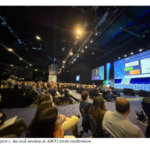
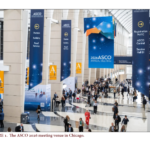
The ASCO 2026 annual meeting in Chicago provided pivotal clarity to the rapidly evolving landscape of renal cell carcinoma. For the kidney cancer community, the presented data offered practice-changing insights across the entire disease spectrum, ranging from biomarker-driven adjuvant therapy selection to novel second-line combination regimens and emerging strategies for bone metastases. This wealth of high-quality clinical data marks a definitive inflection point in oncology, signaling a paradigm shift from merely prolonging survival to actively achieving long-term cures for a significant subset of patients. Crucially, the integration of advanced genomic and proteomic biomarkers is finally moving precision medicine from a theoretical goal to a frontline clinical reality. Furthermore, novel therapeutic mechanisms showcased this year promise to overcome long-standing resistance pathways, offering renewed hope for patients with refractory disease. Ultimately, these milestones solidify ASCO 2026 as a landmark event that will redefine standard-of-care algorithms and reshape clinical trial design for years to come.
Free Access
Full Text
PDF
The ASCO 2026 annual meeting in Chicago provided pivotal clarity to the rapidly evolving landscape of renal cell carcinoma. For the kidney cancer community, the presented data offered practice-changing insights across the entire disease spectrum, ranging from biomarker-driven adjuvant therapy selection to novel second-line combination regimens and emerging strategies for bone metastases. This wealth of high-quality clinical data marks a definitive inflection point in oncology, signaling a paradigm shift from merely prolonging survival to actively achieving long-term cures for a significant subset of patients. Crucially, the integration of advanced genomic and proteomic biomarkers is finally moving precision medicine from a theoretical goal to a frontline clinical reality. Furthermore, novel therapeutic mechanisms showcased this year promise to overcome long-standing resistance pathways, offering renewed hope for patients with refractory disease. Ultimately, these milestones solidify ASCO 2026 as a landmark event that will redefine standard-of-care algorithms and reshape clinical trial design for years to come.
Selected Presentations 1 article
Selected Presentations Open Access
Most Clinically Significant Kidney Cancer Presentations from ASCO 2026
This section presents full abstract summaries for the ten kidney cancer abstracts selected by the Editor-in-Chief as the most clinically significant presentations from GU ASCO 2026. Each entry includes background, methods, key results, safety profile, and editorial perspective. Abstracts are ordered by assigned rank from the editorial selection. Primary data are drawn from presentations, published JCO supplement abstracts, press releases, and peer-reviewed commentary.
Free Access
Full Text
PDF
This section presents full abstract summaries for the ten kidney cancer abstracts selected by the Editor-in-Chief as the most clinically significant presentations from GU ASCO 2026. Each entry includes background, methods, key results, safety profile, and editorial perspective. Abstracts are ordered by assigned rank from the editorial selection. Primary data are drawn from presentations, published JCO supplement abstracts, press releases, and peer-reviewed commentary.
Journal Club 1 article

Journal Club Open Access
Journal Club selections are curated by the Kidney Cancer Journal editorial team based on clinical significance, study design rigor, and potential impact on practice. Full-text access available via PubMed and respective journal platforms
Free Access
Full Text
PDF
Journal Club selections are curated by the Kidney Cancer Journal editorial team based on clinical significance, study design rigor, and potential impact on practice. Full-text access available via PubMed and respective journal platforms
Commentary 1 article
No image