
doi.org/10.52733/ASCO26Summary
Thomas E. Hutson, DO, PharmD, FACP
Editor-in-Chief, Kidney Cancer Journal
A Summary Report for the Global Oncology Community
Chicago, Illinois | May 29 – June 2, 2026 | Kidney Cancer Journal, Volume 24
From the Editor’s Desk: ASCO 2026 in Chicago brought remarkable clarity to a field in rapid evolution. For the kidney cancer community, this meeting delivered practice-defining data at nearly every stage of disease — from biomarker-guided adjuvant selection to novel second-line combinations and early signals in bone metastases management. The breadth and quality of data presented this year may represent a true inflection point: we are no longer just extending survival, we are beginning to cure a meaningful fraction of our patients.
Overview: Themes Shaping Kidney Cancer at ASCO 2026
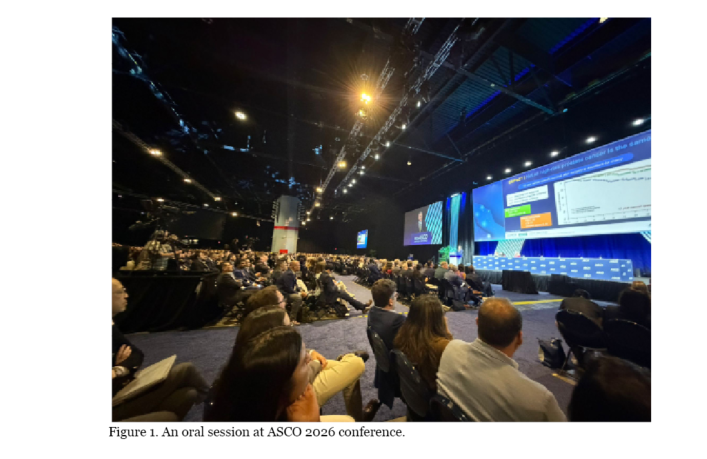
The 2026 ASCO Annual Meeting, held under the theme The Science and Practice of Translation: Improving Cancer Outcomes Worldwide, featured a rich kidney cancer program that spanned the full disease trajectory — from perioperative strategies in resected disease to novel combinations in the metastatic setting. Presented predominantly within the Genitourinary track and the dedicated kidney cancer oral abstract session, the data emerging from this meeting confirm that the HIF-2α pathway, immune checkpoint blockade, and precision biomarker selection are now converging to reshape the standard of care.
Five overarching themes defined the kidney cancer landscape at ASCO 2026:
- The maturation of the adjuvant IO era, with combination strategies now surpassing pembrolizumab monotherapy.
- The emergence of belzutifan (HIF-2α inhibition) as a cornerstone agent across both adjuvant and advanced disease settings.
- Biomarker refinement — particularly circulating tumor DNA (ctDNA) — to guide treatment selection and prevent overtreatment.
- Expanding evidence for IO-based strategies in non-clear cell and bone-metastatic RCC.
- Long-term survival data confirming durable cures with first-line dual checkpoint blockade in selected patients.
1. The Adjuvant Setting: A New Standard of Care Emerges
LITESPARK-022: Belzutifan + Pembrolizumab vs Pembrolizumab in Adjuvant ccRCC
The most anticipated kidney cancer presentation at both ASCO GU and the ASCO Annual Meeting came from the phase 3 LITESPARK-022 trial (NCT05239728). This double-blind, randomized study enrolled 1,841 patients with treatment-naïve clear cell RCC at increased risk of recurrence following nephrectomy — defined by pathologic T3/T4, node-positive, or M1 NED status — who were randomly assigned 1:1 to pembrolizumab plus belzutifan (120 mg daily for 54 weeks) versus pembrolizumab plus placebo.
Key Results: At a median follow-up of 28.4 months, the combination demonstrated a statistically significant and clinically meaningful improvement in disease-free survival (DFS):
- Median DFS: not reached in either arm, but with early and sustained curve separation
- 2-year DFS rate: 81% (combination) vs 70% (pembro alone) — an 11 percentage point absolute difference
- Hazard ratio: 0.72 (95% CI, 0.59–0.87; P=0.0003)
- Grade ≥3 treatment-emergent adverse events: 52% (combination) vs 30% (pembro alone), driven primarily by anemia (12%), elevated ALT (6%), and hypoxia (5%), all manageable with dose modifications
LITESPARK-022 is the first adjuvant phase 3 trial in RCC to demonstrate a significant benefit over an active immunotherapy comparator. As Dr. Toni Choueiri (Dana-Farber Cancer Institute) emphasized, approximately 40% of patients treated with pembrolizumab alone experience disease recurrence within five years. LITESPARK-022 now provides an evidence-based path to further close that gap. Overall survival data are immature and ongoing follow-up is critical, but the DFS signal is both statistically robust and clinically meaningful.
RAMPART: Durvalumab Monotherapy and Durvalumab+Tremelimumab vs Active Monitoring
The phase 3 RAMPART trial (NCT03288532), led by Dr. James Larkin (The Royal Marsden), represents the largest investigator-led adjuvant immunotherapy study in RCC. The trial enrolled 790 patients in a 3:2:2 ratio across three arms: active monitoring (n=340), durvalumab monotherapy for 1 year (n=225), or durvalumab plus tremelimumab for 1 year (n=225). The primary endpoint was DFS; the design included pre-specified analysis in higher-risk patients.
Key Results (full results presented at ASCO 2026 Annual Meeting):
- Durvalumab monotherapy vs active monitoring: HR 0.74 (95% CI, 0.53–1.04; P=0.041) — a 26% relative risk reduction, but the result did not cross the pre-specified threshold for statistical significance
- 3-year DFS: 78% vs 72% (durvalumab vs monitoring) — a 6-point absolute difference
- Durvalumab + tremelimumab: HR 0.65 (95% CI, 0.45–0.93) — a statistically significant improvement, particularly pronounced in the high-risk subgroup (HR 0.52; P=0.0016; 2-yr DFS 81% vs 67%)
- Quality of life: combination arm associated with worse role functioning, fatigue, and sleep at 16 weeks; most effects attenuated by 15 months
The discussant, Dr. Brian Rini, noted that RAMPART adds further evidence supporting the activity of adjuvant checkpoint blockade in RCC, with the durvalumab+tremelimumab arm providing both statistical and clinical significance, particularly in high-risk patients. The regulatory future of this combination in the adjuvant setting remains to be determined, but the biological signal is unmistakable.
2. Advanced RCC: Reshaping the Post-Immunotherapy Landscape

Table 1. Summary of Key Abstracts: ASCO 2026 Kidney Cancer
LITESPARK-011: Belzutifan + Lenvatinib vs Cabozantinib in Post-IO RCC
There is currently no globally accepted standard of care for advanced clear cell RCC following progression on immune checkpoint inhibitor therapy. VEGFR-TKIs — particularly cabozantinib — have been widely used in this setting, but they were developed and tested largely in the pre-IO era. LITESPARK-011 (NCT04586231) is the first phase 3 trial to directly compare a HIF-2α+TKI combination against a contemporary VEGFR-TKI in this population.
The trial enrolled 747 patients with locally advanced or metastatic ccRCC whose disease had progressed during or after first- or second-line anti-PD-(L)1 therapy. Patients were randomized to belzutifan 120 mg plus lenvatinib 20 mg daily (n=371) versus cabozantinib 60 mg daily (n=376). Co-primary endpoints were BICR-assessed PFS and OS.
Second Interim Analysis Results (data cutoff April 2025, presented at ASCO GU 2026):
- Median PFS: 14.8 months (belzutifan/lenvatinib) vs 10.7 months (cabozantinib) — HR 0.70 (95% CI, 0.59–0.84; P<0.001)
- 24-month PFS rate: 35.6% vs 19.1%
- ORR: 52.6% vs 40.2%, with complete responses in 20 vs 4 patients
- Median duration of response: 23.0 vs 12.3 months — a near doubling
- Median OS: 34.9 vs 27.6 months (HR 0.85; 95% CI, 0.68–1.05) — trending in favor but not yet statistically significant; final OS analysis pending
- Most common grade ≥3 AE: anemia (belzutifan arm) and diarrhea (cabozantinib arm); no unexpected toxicity signals
Dr. Robert Motzer (Memorial Sloan Kettering) presented the data, concluding that belzutifan+lenvatinib addresses an unmet clinical need and represents a new treatment option for patients with RCC that has progressed after anti-PD-(L)1 therapy. The FDA accepted the supplemental NDA in May 2026 for priority review. This combination is poised to become the preferred second-line regimen once OS maturation is achieved.
3. Expanding the Frontier: Novel Strategies and Emerging Populations
Cadonilimab + Axitinib in First-Line Non-Clear Cell RCC
Non-clear cell RCC histologies — including papillary, chromophobe, collecting duct, and translocation-associated subtypes — collectively represent 15–25% of all RCC diagnoses but have historically been underrepresented in phase 3 trials. The ASCO 2026 oral session featured a prospective, multi-center phase 1b/2 trial from Dr. Xu Hu’s group evaluating cadonilimab (a PD-1/CTLA-4 bispecific antibody) combined with axitinib as first-line treatment for advanced non-clear cell RCC.
Despite integrating three immunological targets through bispecific PD-1 and CTLA-4 blockade plus VEGF pathway inhibition, the combination demonstrated manageable toxicity. The ORR and duration of response were comparable to TKI+IO doublets reported in this setting, supporting the applicability of IO-based combination strategies across non-clear cell histologies. Discussant Dr. Martin Voss (Memorial Sloan Kettering) highlighted the importance of this data in the context of the broader move toward IO-based frontline therapy across all RCC subtypes.
RADICAL Trial: Radium-223 + Cabozantinib in Bone-Metastatic RCC
Osseous metastases occur in approximately 30% of metastatic RCC patients and are associated with significant skeletal-related morbidity, pain, and impaired quality of life. The phase 2 randomized RADICAL trial (Alliance A031801), presented by Dr. Rana McKay, explored the combination of the alpha-emitting radiopharmaceutical radium-223 dichloride (well-established in metastatic castration-resistant prostate cancer) with cabozantinib in patients with RCC and bone metastases.
Results demonstrated a manageable safety profile for the combination, with encouraging signals toward reduction of symptomatic skeletal events (SSEs). This is the first randomized trial to evaluate this strategy in RCC, providing critical proof-of-concept data. Dr. Voss emphasized that while a phase 3 trial is needed before clinical adoption, this dataset validates a biologically compelling approach in a population with significant unmet need.
KEYNOTE-564 ctDNA Substudy: Toward Precision Adjuvant Therapy
One of the most practice-informing presentations at ASCO 2026 came not from a new trial, but from a sophisticated biomarker analysis of KEYNOTE-564, presented by Dr. Toni Choueiri. Using Natera’s Signatera assay, circulating tumor DNA was evaluated in adjuvant pembrolizumab and placebo recipients. The central finding was clinically powerful:
- ctDNA-positive patients at baseline derived the greatest absolute benefit from adjuvant pembrolizumab — consistent with molecular evidence of residual disease driving recurrence risk.
- ctDNA-negative patients had high event-free rates regardless of treatment assignment, raising the possibility that a meaningful subgroup may derive little or no benefit from a year of pembrolizumab therapy.
This analysis, combined with growing concern about overtreatment in the adjuvant setting articulated by multiple discussants including Dr. Pooja Ghatalia, makes a compelling case for prospective ctDNA-guided trial designs. The field appears to be converging on a future in which ctDNA clearance, persistence, and kinetics — rather than pathologic staging alone — define who receives, continues, or discontinues adjuvant therapy.
4. Summary of Key Abstracts: ASCO 2026 Kidney Cancer
5. The Long View: Durability and the Promise of Cure
No summary of ASCO 2026 kidney cancer data would be complete without acknowledging the profound significance of long-term follow-up data presented for nivolumab+ipilimumab in CheckMate 214. At 10 years — the longest phase 3 follow-up of any first-line checkpoint inhibitor combination in advanced RCC — approximately 35% of intermediate/poor-risk patients remain alive, compared to approximately 24% with sunitinib. This plateau in the survival curve, which appears durable and robust, confirms what the field has long hoped: a subset of patients achieve functional cure with first-line dual checkpoint blockade.
This milestone reframes our entire therapeutic framework. It means that the goal of treatment in advanced RCC is no longer simply prolongation of life but increasingly the possibility of deep, sustained remission. The challenge ahead is identifying, through molecular biomarkers, imaging, and clinical features, which patients are most likely to achieve this outcome — and how to rescue those who do not.
6. Take-Home Messages for the Global Kidney Cancer Clinician
Based on the totality of data presented at ASCO 2026, the following summary table distills the most actionable messages for oncologists worldwide managing renal cell carcinoma:

Table 2. Key take-home message
7. Editorial Perspective: The Road Ahead
ASCO 2026 leaves the kidney cancer community with several strategic imperatives. First, the regulatory and clinical integration of belzutifan — both in the adjuvant setting alongside pembrolizumab and as a second-line combination with lenvatinib — will require practical oncology teams to become familiar with the management of HIF-2α-related toxicities, particularly anemia and hypoxia. These are manageable with proactive dose modification and supportive care algorithms, but they require anticipation.
Second, the biomarker agenda has never been more urgent. ctDNA represents the most mature liquid biopsy tool for RCC today, and the data from KEYNOTE-564 should accelerate the design of biomarker-stratified adjuvant trials. The integration of ctDNA surveillance into clinical practice — while not yet standard — is a near-term reality in high-volume kidney cancer programs.
Third, the non-clear cell RCC field is finally generating prospective, multi-center data that can begin to populate evidence-based treatment algorithms for these patients. This is long overdue, and the community should advocate strongly for the continued inclusion of non-clear cell histologies in pivotal trials.
Finally, the RADICAL data, however early, remind us that the management of bone metastases in RCC has lagged behind comparable efforts in prostate and breast cancer. Dedicated bone-directed clinical trial programs in RCC are needed, and RADICAL has laid important groundwork.
In aggregate, ASCO 2026 reinforces a field moving with remarkable velocity. The question is no longer whether we can improve on PD-1 blockade alone — we clearly can. The question now is how to sequence, combine, and personalize these advances for each individual patient. That challenge — both scientific and humanistic — defines the work ahead.
Key References
1. Choueiri TK et al. LITESPARK-022: Adjuvant pembrolizumab+belzutifan vs pembrolizumab for ccRCC. ASCO GU 2026. Abstract LBA418. J Clin Oncol. 2026;44(suppl 7):LBA418.
2. Motzer RJ et al. LITESPARK-011: Belzutifan+lenvatinib vs cabozantinib for advanced RCC post-IO. ASCO GU 2026. Abstract LBA417. J Clin Oncol. 2026;44(suppl 7):LBA417.
3. Larkin J et al. RAMPART: Durvalumab monotherapy vs active monitoring for resected RCC. ASCO 2026 Annual Meeting. Abstract LBA4511.
4. McKay RR et al. RADICAL (Alliance A031801): Phase 2 RCT of radium-223+cabozantinib in RCC with bone metastases. ASCO 2026 Annual Meeting.
5. Hu X et al. Phase 1b/2 trial of first-line cadonilimab+axitinib in advanced non-clear cell RCC. ASCO 2026 Annual Meeting.
6. Choueiri TK et al. ctDNA analysis in RCC treated with adjuvant pembrolizumab: KEYNOTE-564. ASCO 2026 Annual Meeting.
7. Motzer RJ et al. CheckMate 214: 10-year follow-up, nivolumab+ipilimumab vs sunitinib in advanced RCC. ASCO 2026 / ASCO GU 2026.
Disclosure Statement: This summary has been prepared by the editorial team of Kidney Cancer Journal for educational purposes. The authors have no relevant conflicts of interest to declare with respect to the content of this summary.
© 2026 Kidney Cancer Journal. All rights reserved. | Publication: Volume 24, Issue 2 | kidneycancerjournal.com