
Editorial 1 article
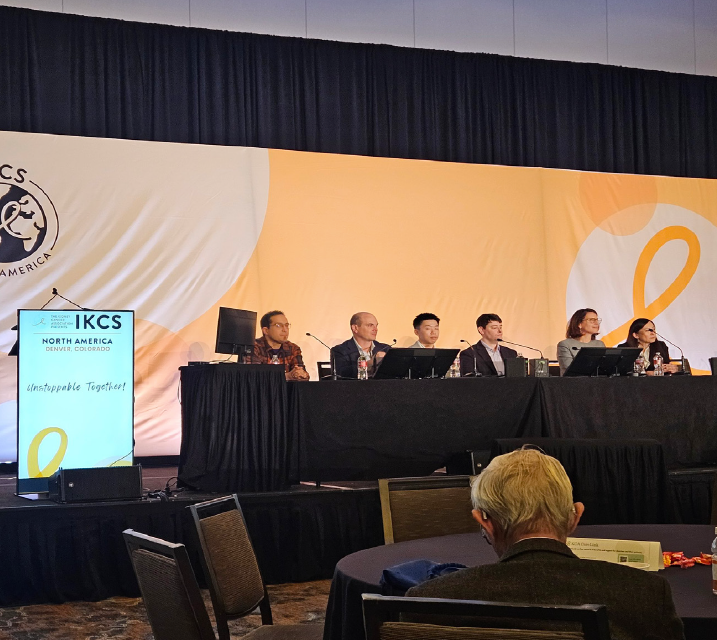
As we reflect on the proceedings of the 2025 International Kidney Cancer Symposium (IKCS): North America in Denver, it is increasingly clear that our field is undergoing a fundamental shift. We are moving away from the “all-comer” trial designs of the last decade and entering a “Granular Era”—one defined by molecular vulnerability, metabolic targeting, and the aggressive pursuit of precision in rare histological variants.
As we reflect on the proceedings of the 2025 International Kidney Cancer Symposium (IKCS): North America in Denver, it is increasingly clear that our field is undergoing a fundamental shift. We are moving away from the “all-comer” trial designs of the last decade and entering a “Granular Era”—one defined by molecular vulnerability, metabolic targeting, and the aggressive pursuit of precision in rare histological variants.
Review Article 1 article

BACKGROUND: Kidney cancer represents an emerging public health concern in India, with rising incidence rates and a significant economic burden. While global research has identified common risk factors, India-specific modifiable risk factors remain poorly understood. OBJECTIVE: To systematically review and analyze modifiable risk factors for kidney cancer among Indian adults and recommend targeted preventive measures. METHODS: A systematic search of electronic databases (PubMed/MEDLINE, Scopus, Web of Science, IndMED, DOAJ) was conducted for studies published between 2000 and 2023. Studies investigating modifiable risk factors for kidney cancer in Indian adults were included. Quality assessment was performed using the CASP and MMAT tools. RESULTS: Eleven studies met the inclusion criteria, comprising 3,486 participants across various Indian regions. Four major categories of modifiable risk factors were identified: lifestyle-related (smoking: OR=2.3, 95% CI: 1.4-3.8; obesity: OR=2.4, 95% CI: 1.6-3.5), dietary patterns (traditional diet showing protective effects: OR=0.6, 95% CI: 0.4-0.9), environmental-occupational exposures (industrial chemicals: OR=2.1, 95% CI: 1.3-3.4), and urbanization impacts. Significant interactions were observed between urban living and Western dietary patterns, with urbanization emerging as a central risk factor. CONCLUSIONS: This review reveals complex interactions between traditional practices and modern lifestyle changes in kidney cancer risk among Indians. Prevention strategies should focus on preserving protective traditional practices while addressing risks associated with urbanization. Recommendations include strengthening occupational safety measures, promoting traditional dietary practices, and developing targeted screening programs for urban populations.
BACKGROUND: Kidney cancer represents an emerging public health concern in India, with rising incidence rates and a significant economic burden. While global research has identified common risk factors, India-specific modifiable risk factors remain poorly understood. OBJECTIVE: To systematically review and analyze modifiable risk factors for kidney cancer among Indian adults and recommend targeted preventive measures. METHODS: A systematic search of electronic databases (PubMed/MEDLINE, Scopus, Web of Science, IndMED, DOAJ) was conducted for studies published between 2000 and 2023. Studies investigating modifiable risk factors for kidney cancer in Indian adults were included. Quality assessment was performed using the CASP and MMAT tools. RESULTS: Eleven studies met the inclusion criteria, comprising 3,486 participants across various Indian regions. Four major categories of modifiable risk factors were identified: lifestyle-related (smoking: OR=2.3, 95% CI: 1.4-3.8; obesity: OR=2.4, 95% CI: 1.6-3.5), dietary patterns (traditional diet showing protective effects: OR=0.6, 95% CI: 0.4-0.9), environmental-occupational exposures (industrial chemicals: OR=2.1, 95% CI: 1.3-3.4), and urbanization impacts. Significant interactions were observed between urban living and Western dietary patterns, with urbanization emerging as a central risk factor. CONCLUSIONS: This review reveals complex interactions between traditional practices and modern lifestyle changes in kidney cancer risk among Indians. Prevention strategies should focus on preserving protective traditional practices while addressing risks associated with urbanization. Recommendations include strengthening occupational safety measures, promoting traditional dietary practices, and developing targeted screening programs for urban populations.
Meeting Summary 3 articles

The 2025 International Kidney Cancer Symposium—North America (IKCS-NA), held November 12–15 in Denver, presented a comprehensive overview of emerging scientific, clinical, and patient-centered advances in renal cell carcinoma (RCC). The meeting highlighted rapid progress across preclinical discovery, biomarker-driven therapy, novel immunotherapeutic platforms, and evolving clinical trial strategies, with particular emphasis on non–clear cell RCC, tumor–immune microenvironment modulation, and precision medicine. Preclinical sessions showcased advances in nanoparticle-based immunotherapy, neoantigen vaccines, STING pathway activation, and metabolic vulnerabilities across rare RCC subtypes. Clinical discussions addressed challenges in oligometastatic disease management, imaging innovation, adjuvant therapy sequencing, and integration of metastasis-directed approaches. Notable oral and poster presentations included first-in-human data on bispecific T-cell engagers, CNS-penetrant targeted therapies, AI-enabled spatial immunobiology, and environmental exposures influencing RCC outcomes. The symposium also underscored critical issues in survivorship, cognitive burden, nutrition, and adolescent and young adult kidney tumors, reflecting a growing commitment to holistic cancer care. Collectively, IKCS 2025 illustrated a field in transition—where biological insight, technological innovation, and multidisciplinary collaboration are converging to redefine the future of kidney cancer research and clinical management.
The 2025 International Kidney Cancer Symposium—North America (IKCS-NA), held November 12–15 in Denver, presented a comprehensive overview of emerging scientific, clinical, and patient-centered advances in renal cell carcinoma (RCC). The meeting highlighted rapid progress across preclinical discovery, biomarker-driven therapy, novel immunotherapeutic platforms, and evolving clinical trial strategies, with particular emphasis on non–clear cell RCC, tumor–immune microenvironment modulation, and precision medicine. Preclinical sessions showcased advances in nanoparticle-based immunotherapy, neoantigen vaccines, STING pathway activation, and metabolic vulnerabilities across rare RCC subtypes. Clinical discussions addressed challenges in oligometastatic disease management, imaging innovation, adjuvant therapy sequencing, and integration of metastasis-directed approaches. Notable oral and poster presentations included first-in-human data on bispecific T-cell engagers, CNS-penetrant targeted therapies, AI-enabled spatial immunobiology, and environmental exposures influencing RCC outcomes. The symposium also underscored critical issues in survivorship, cognitive burden, nutrition, and adolescent and young adult kidney tumors, reflecting a growing commitment to holistic cancer care. Collectively, IKCS 2025 illustrated a field in transition—where biological insight, technological innovation, and multidisciplinary collaboration are converging to redefine the future of kidney cancer research and clinical management.
IKCS North America 2025 (Denver, November 13–15, 2025) highlighted a maturing post‑IO landscape in RCC, with an emphasis on novel HIF‑2α inhibitors, rational targets in chromophobe RCC, and patient‑centered outcomes. Full abstract texts are expected to appear via the Kidney Cancer Association and partner journals, but the following oral and featured presentations represent high‑impact findings most suitable for coverage in a kidney cancer–focused journal.
IKCS North America 2025 (Denver, November 13–15, 2025) highlighted a maturing post‑IO landscape in RCC, with an emphasis on novel HIF‑2α inhibitors, rational targets in chromophobe RCC, and patient‑centered outcomes. Full abstract texts are expected to appear via the Kidney Cancer Association and partner journals, but the following oral and featured presentations represent high‑impact findings most suitable for coverage in a kidney cancer–focused journal.
The 2026 ASCO Genitourinary Cancers Symposium (February 26–28, 2026, San Francisco, CA) will bring together global leaders in kidney, bladder, and prostate cancer research to illuminate how precision oncology is reshaping clinical practice. This year’s GU program is expected to emphasize biomarker-guided treatment, triplet therapy evolution, and non-clear cell RCC breakthrough science—a thematic continuation of the momentum seen at IKCS and ESMO in 2025.
The 2026 ASCO Genitourinary Cancers Symposium (February 26–28, 2026, San Francisco, CA) will bring together global leaders in kidney, bladder, and prostate cancer research to illuminate how precision oncology is reshaping clinical practice. This year’s GU program is expected to emphasize biomarker-guided treatment, triplet therapy evolution, and non-clear cell RCC breakthrough science—a thematic continuation of the momentum seen at IKCS and ESMO in 2025.