Journal Club selections are curated by the Kidney Cancer Journal editorial team based on clinical significance, study design rigor, and potential impact on practice. Full-text access available via PubMed and respective journal platforms.
Belzutifan plus lenvatinib versus cabozantinib in patients with previously treated advanced renal cell carcinoma (LITESPARK-011): an open-label, randomised, controlled, phase 3 trial. Motzer RJ, McDermott R, Park S et al. The Lancet, 2026; 408, 808-820.
Background
The identification of a clear standard of care for patients with advanced clear-cell renal cell carcinoma following anti-PD-1 or anti-PD-L1 therapy warrants study as an unmet need. We aimed to investigate belzutifan plus lenvatinib versus cabozantinib in participants with clear-cell renal cell carcinoma previously treated with immune checkpoint inhibitors.
Methods
LITESPARK-011 is a phase 3, open-label, randomised, active-controlled study conducted at 184 medical centres in 25 countries in Asia, Australia, Europe, North America, and South America. Participants were aged 18 years or older with advanced unresectable, locally advanced or metastatic stage IV clear-cell renal cell carcinoma, with disease progression following anti-PD-1 or anti-PD-L1 therapy with or without previous VEGFR-tyrosine-kinase inhibitors. Participants were randomly assigned (1:1) to receive 120 mg belzutifan plus 20 mg lenvatinib (belzutifan–lenvatinib) or 60 mg cabozantinib orally once daily until disease progression or unacceptable adverse events occurred. Randomisation was done using a web-based interactive response system (block size four) and stratified by International Metastatic Renal-Cell Carcinoma Database Consortium prognostic score (0 vs 1–2 vs 3–6), line of previous immunotherapy (adjuvant, neoadjuvant-adjuvant, or first-line vs second-line), and geographical region (North America vs western Europe vs rest of the world). The dual primary endpoints were progression-free survival by masked independent central review and overall survival, assessed in all randomly assigned participants. Safety was assessed in all randomly assigned participants who received at least one dose of study treatment. This study is registered with ClinicalTrials.gov, NCT04586231, and has completed participant recruitment and is ongoing with treatment and follow-up.
Findings
Between March 5, 2021, and Sept 1, 2023, 955 individuals were screened for eligibility, 747 of whom were randomly assigned to belzutifan–lenvatinib (n=371) or cabozantinib (n=376). 565 (76%) participants were male and 182 (24%) were female; 651 (87%) were White (table 1). At second interim analysis (data cutoff April 9, 2025; median follow-up 29·0 months [IQR 23·7–34·9]), progression-free survival was significantly longer in the belzutifan–lenvatinib group compared with the cabozantinib group (median 14·8 months [95% CI 11·2–16·6] vs 10·7 months [9·2–11·1]; hazard ratio [HR] 0·70 [95% CI 0·59–0·84]; one-sided p<0·0001). Overall survival was not significantly different between the groups (median 34·9 months [95% CI 27·5–not reached] vs 27·6 months [24·0–31·4]; HR 0·85 [95% CI 0·68–1·05]; one-sided p=0·061). Grade 3 or worse treatment-emergent adverse events occurred in 311 (84%) of 370 participants in the belzutifan–lenvatinib group and 307 (83%) of 371 participants in the cabozantinib group, most commonly hypertension in both groups (114 [31%] participants in the belzutifan–lenvatinib group and 107 [29%] in the cabozantinib group). Treatment-related adverse events led to two deaths in the belzutifan–lenvatinib group and one death in the cabozantinib group.
Interpretation
Belzutifan–lenvatinib represents a novel and efficacious treatment option. Although overall survival was not significantly different between the groups, belzutifan–lenvatinib might be a new standard of care for patients with advanced clear-cell renal cell carcinoma with disease progression after previous anti-PD-1 or anti-PD-L1 therapy. The safety profile of belzutifan–lenvatinib was consistent with those of the individual drugs.
Martinez C, Chen D, Leong R, et al. Disease-free survival as a surrogate outcome for localized kidney cancer—A systematic review and meta-analysis Ann Oncol. 2026;37(6):861–871. doi:10.1016/j.annonc.2026.02.011
Background
Disease-free survival (DFS) is commonly used as a primary endpoint in trials for localized renal cell carcinoma (RCC), although its validity as a surrogate for overall survival (OS) remains uncertain. The objective of this study was to evaluate whether DFS is a reliable surrogate endpoint for OS in this setting.
Methods The authors conducted a systematic review and trial-level meta-analysis of randomized controlled trials assessing systemic or perioperative therapies in patients with localized RCC. Databases were searched from inception to June 10, 2025. Trial-level surrogacy between DFS and OS was assessed using weighted least-squares meta-regression of log-transformed hazard ratios (HRs), and the surrogate threshold effect was estimated.
Results
In total, 25 randomized controlled trials were analyzed; 13 trials, analyzed as 15 study-level units comprising 9594 patients, reported HRs for both OS and DFS. DFS demonstrated a strong correlation with OS (weighted Pearson correlation coefficient, 0.75; 95% confidence level, 0.55–0.91; corresponding coefficient of determination, 0.57). The surrogate threshold effect analysis identified a DFS HR <0.914 as predictive of OS benefit. Funnel plots showed no clear asymmetry, and Egger tests did not indicate significant publication bias.
Conclusions
DFS demonstrated a strong association with OS and may serve as a valid trial-level surrogate endpoint patients with in localized RCC. A DFS HR <0.914 was more likely to predict an OS benefit. These findings support the use of DFS as a primary endpoint in localized RCC trials, whereas continued long-term follow-up and future patient-level validation remain important.
Suleja, A ., A lfarhan, A .R., Miszczyk, M. e t a l. Salvage therapies for local recurrence of renal cell carcinoma: a systematic review and meta-analysis. World J Urol 44, 568 (2026). https://doi.org/10.1007/s00345-026-06684-8
Background
We aimed to systematically summarize data on efficacy of local salvage therapies for local recurrence of renal cell carcinoma (RCC).
Methods
We searched MEDLINE, Embase, Web of Science, CENTRAL, and Google Scholar through 05/08/2026, for studies on local salvage therapies for local recurrence of RCC following radical nephrectomy, partial nephrectomy, or ablation (PROSPERO: CRD42024623099). Meta-analyses were conducted using random-effects models. Risk of bias (RoB) was assessed using ROBINS-I.
Results
Forty-seven studies comprising 2039 patients were included (45 retrospective). Patients recurring after primary ablation predominantly presented with new renal masses, and were managed with repeat ablation (6 studies, n = 193) or salvage surgery (3 studies, n = 48), both yielding low recurrence rates. Local recurrences (M0) after primary partial nephrectomy (PN), most often in patients with pT1 disease, were treated with repeat PN, radical nephrectomy (RN), or ablation (15 studies, n = 562), with heterogeneous outcomes across modalities, ranging from low recurrence rates to predominantly distant metastatic failure. In contrast, recurrences after primary RN (12 studies, n = 564) occurred in a population with primarily locally advanced disease (pT3-4) and outcomes were notably worse, driven by distant progression. Four studies used radiotherapy in salvage setting, with heterogeneous methods and outcomes. Majority of studies were assessed moderate RoB, 16 studies assessed as serious, predominantly due to bias in participant selection.
Conclusion
Efficacy of local salvage therapies for RCC recurrence is influenced by the primary treatment and histopathological advancement of primary disease. Repeat ablation provides favorable outcomes, while recurrences after PN can be managed with repeat surgery or ablation, with heterogeneous results (from low recurrence rates to frequent distant metastases). Post-RN patients, often with initially advanced disease, have worse prognosis with approximately two-thirds experiencing progression by three years, primarily due to distant metastases. Overall, quality of evidence remains low. There is critical need for expert consensus on quality indicators for locally recurrent RCC care and for prospective registries with standardized outcome reporting.
Jonsson, G., Oliveira, T., Hofmann, M. et al. Urinary multi-omics reveal non-invasive diagnostic biomarkers in clear cell renal cell carcinoma. EMBO Mol Med 18, 3649–3676 (2026). https://doi.org/10.1038/s44321-026-00498-2
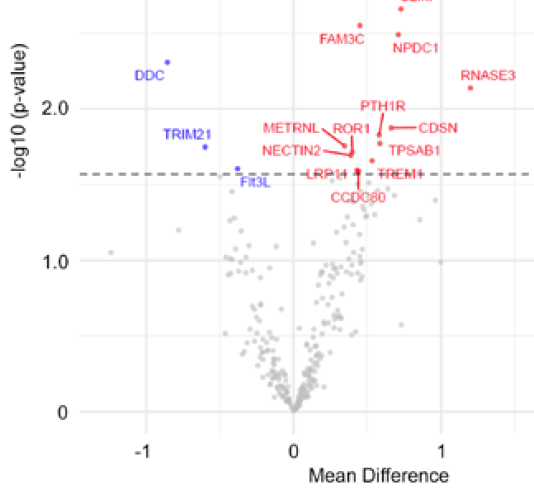
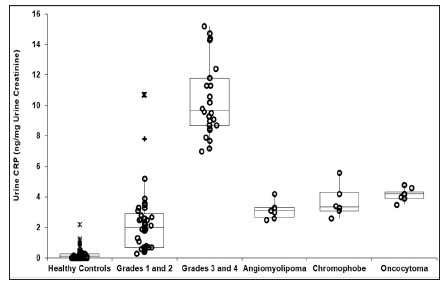
Clear cell renal cell carcinoma (ccRCC) is the most common kidney malignancy. Yet, no rapid, non-invasive biomarkers are available for diagnosis or screening. Urine represents an ideal analyte matrix due to its accessibility, low invasiveness, longitudinal sampling, and the kidney’s central role in filtration. Here, we integrated proteomic, lipidomic, and metabolomic analyses of urine from ccRCC patients and controls to identify diagnostic biomarkers. Multi-omics profiling revealed urogenital metabolic dysregulation in ccRCC, including increased lipid metabolism, altered mitochondrial respiration signatures, and elevated urinary lipid content. We identified three urinary protein biomarkers: serum amyloid A1 (SAA1), haptoglobin (HP), and lipocalin 15 (LCN15). Using a parallel reaction monitoring mass spectrometry workflow, we developed a rapid and sensitive assay and combined these markers into a diagnostic UrineScore. The UrineScore achieved 0.96 in an area under the receiver operating characteristic curve analysis in the discovery cohort, and 0.95 in an independent validation cohort. Together, these results support the feasibility of multi-omics-guided urinary biomarker discovery and represent a step toward accessible diagnostic platforms for ccRCC.
Meli K et al. 45(8), Distinct endogenous retroviruses are expressed in mutational subtypes of clear cell renal cell carcinoma and are linked to improved clinical outcomes Cell Reports 2026. 10.1016/j.celrep.2026.117808
Summary
Distinct mutations in chromatin regulators and aberrant expression of transposable elements (TEs), have been associated with clinical benefit to immunotherapy (IO) in specific clear cell renal cell carcinoma (ccRCC) clinical contexts. However, the relationship between mutations in chromatin regulators and TE expression, and their effect on clinical outcomes, are incompletely understood. Here, we identified TEs expressed in distinct mutational subtypes of ccRCC, with endogenous retroviruses (ERVs) comprising the majority of TEs observed. Of these, ERVs 544 and 2014 were upregulated in PBRM1 mutant samples. Patients with high expression of these ERVs and somatic PBRM1 mutations had improved progression-free survival with IO monotherapy, but not targeted therapy, and their upregulation associated with expression of innate immune pathways. Chromatin accessibility increased at ERV 544 and 2014 loci in PBRM1-deficient ccRCC cells, and ERV 544 and 2014 were upregulated upon in vitro PBRM1 knockout in ccRCC cell line clones. Broadly, our study supports a link between PBRM1 mutations, subsequent chromatin accessibility changes, and aberrant but immunoresponsive ERVs in ccRCC.
Leong R , C hen D , A lmasri L , e t a l. P rogression-free survival and objective response rate as a surrogate endpoint for overall survival in metastatic renal cell carcinoma: a systematic review and meta-analysis. Cancer. 2026;e70616. doi:10.1002/cncr.70616
The objective of this systematic review and meta-analysis was to evaluate the validity of progression-free survival (PFS) and the objective response rate (ORR) as surrogate endpoints for overall survival (OS) in randomized controlled trials (RCTs) of metastatic renal cell carcinoma. The MEDLINE, Embase, and Cochrane CENTRAL databases were searched from inception to June 10, 2025. Associations between treatment effects on OS, PFS, and ORR were assessed using Pearson correlation coefficients (r). Surrogate threshold effect (STE) analyses determined the minimum PFS hazard ratio (HR) or ORR odds ratio (OR) required to predict OS benefit. Subgroup analyses were conducted by treatment class, line of therapy, and histology. Sixty-two randomized controlled trials comprising 24,518 patients were included. PFS-OS demonstrated a moderate correlation (r = 0.52; 95% confidence interval [CI], 0.38–0.66), with an STE (HR, 0.92; 95% CI, 0.79–1.09). ORR-OS demonstrated a moderate correlation (r = −0.59; 95% CI, −0.72, −0.45), with an STE (OR, 1.40; 95% CI, 0.99–1.89). Subgroup estimates varied across treatment settings and were frequently imprecise, particularly for ORR and in smaller treatment-class subgroups; limited representation of non–clear cell renal cell carcinoma precluded reliable histology-specific conclusions. Overall, PFS and ORR had moderate trial-level associations with OS in metastatic renal cell carcinoma, but the overall analyses did not demonstrate sufficiently consistent surrogacy to reliably predict OS benefit. These findings should be interpreted cautiously given the substantial heterogeneity of the included trials. Surrogate validity appears to be context-dependent, supporting continued reliance on OS and the need for more robust surrogate endpoints.
McDermott DF, Signoretti S, Lee JL, et al. Final results and predictive biomarkers of response and long-term outcomes with first-line pembrolizumab monotherapy in advanced renal cell carcinoma in the phase II KEYNOTE-427 study. Ann Oncol. 2026 Sep 29:S0923-7534(26)06656-1. doi: 10.1016/j.annonc.2026.09.011.
Background:
Previous results from the single-arm, phase II KEYNOTE-427 study showed antitumor activity with first-line pembrolizumab monotherapy in advanced clear cell renal cell carcinoma (ccRCC) and non-clear cell RCC (nccRCC). We report results of the final efficacy and safety analyses and exploratory, predictive biomarker analysis of KEYNOTE-427. Patients and methods: Eligible participants had histologically confirmed locally advanced, recurrent, or metastatic ccRCC (cohort A) or nccRCC (cohort B) with or without sarcomatoid features, measurable disease per RECIST v1.1, and no prior systemic therapy for advanced RCC. The primary endpoint was objective response rate (ORR) per RECIST v1.1 by blinded independent central review. Prespecified biomarker objectives were to evaluate the association of clinical outcomes with a T-cellinflamed gene expression profile (TcellinfGEP), programmed cell death ligand 1 combined positive score (PD-L1 CPS), RCC driver gene mutations, and circulating tumor DNA (ctDNA; cohort A).
Results: After a median (range) follow-up of 61.1 months (54.7-65.5) in cohort A and 56.7 months (47.9-64.0) in cohort B, ORRs were 36.4% and 26.7%, respectively. Continuous TcellinfGEP was positively associated with ORR in cohort A (P=0.0208) and cohort B (P=0.0021). Continuous PD-L1 CPS was positively associated with ORR (P=0.0195) and progression-free survival (PFS; P=0.0307) in cohort A and ORR (P <0.0001), PFS (P=0.0002), and overall survival (OS; P=0.0014) in cohort B. RCC driver gene mutations showed no consistent patterns with ORR in either cohort. In cohort A, participants with detectable ctDNA at baseline had a shorter OS than participants with a ctDNA-negative status (median: 30.5 months [95% CI 18.1-56.4] vs 53.7 months [28.7-not reached]).
Conclusions:
These results show that pembrolizumab is a highly active agent in ccRCC and nccRCC. Insights from the comprehensive analysis of RCC tumor molecular components and ctDNA may facilitate progress toward effective, biomarker-driven precision treatment in advanced RCC.
McKay RR, Ballman KV, Atherton PJ et al. Phase II Randomized Trial of Radium-223 Dichloride and Cabozantinib in Patients With Renal Cell Carcinoma With Bone Metastases: RADICAL (Alliance A031801). J Clin Oncol. 2026 Aug 20;44(24):2341-2352. doi: 10.1200/JCO-26-01135.
Purpose:
Bone metastases (BM) occur in approximately 30% of patients with metastatic renal cell carcinoma (mRCC) and are associated with poor survival and symptomatic skeletal events (SSEs). Radium-223, an alpha-emitting bone-seeking radioisotope, and cabozantinib, a tyrosine kinase inhibitor, have demonstrated activity in BM. RADICAL (Alliance A031801; ClinicalTrials.gov identifier: NCT04071223) evaluated cabozantinib ± radium-223 in mRCC with BM.
Methods: This phase II trial enrolled patients with mRCC of any histology with ≥1 BM. Patients were randomly assigned 1:1 to cabozantinib ± radium-223, stratified by osteoclast-targeted therapy (OTT), prior therapy, opioid use, and International mRCC Database Consortium (IMDC) risk. The primary endpoint was SSE-free survival (SSE-FS). Secondary endpoints included safety, objective response rate (ORR), progression-free survival, and overall survival (OS). A target of 124 evaluable patients was planned, with a prespecified interim futility analysis at 50% of expected SSE-FS events; the trial would stop if the stratified hazard ratio (sHR) > 1.0.
Results: The prespecified interim futility analysis was conducted after 90 patients were enrolled and crossed the futility boundary, leading to closure at 98 patients. The final analysis included all 98 patients. Median age was 63 years, 82.7% had clear cell histology, and 79.6% were using an OTT. IMDC risk was favorable (18.4%), intermediate (67.3%), and poor (14.3%). Median follow-up was 13.1 months. Median SSE-FS for cabozantinib with radium-223 versus cabozantinib was 16.7 versus 17.6 months (sHR, 1.46 [90% CI, 0.86 to 2.51]). Median OS was 28.3 versus 19.7 months (sHR, 1.40 [95% CI, 0.70 to 2.79]). ORR was 19.4% versus 25.0% (P = .78). Grade ≥3 adverse events were similar across arms (69.6% v 75.5%). Conclusion: Radium-223 did not improve SSE-FS when added to cabozantinib. The combination demonstrated a manageable safety profile.